Beyond the Development · Analysis
Golf Tourism in Croatia: An Investment Opportunity That Demands a Broader Perspective
The economic case is real. So are the constraints. The projects that succeed will be the ones that treat water, land and community as part of the business plan, not as obstacles to it.
By BIOPHILIA Editorial Team · 6 November 2026 · 9 min
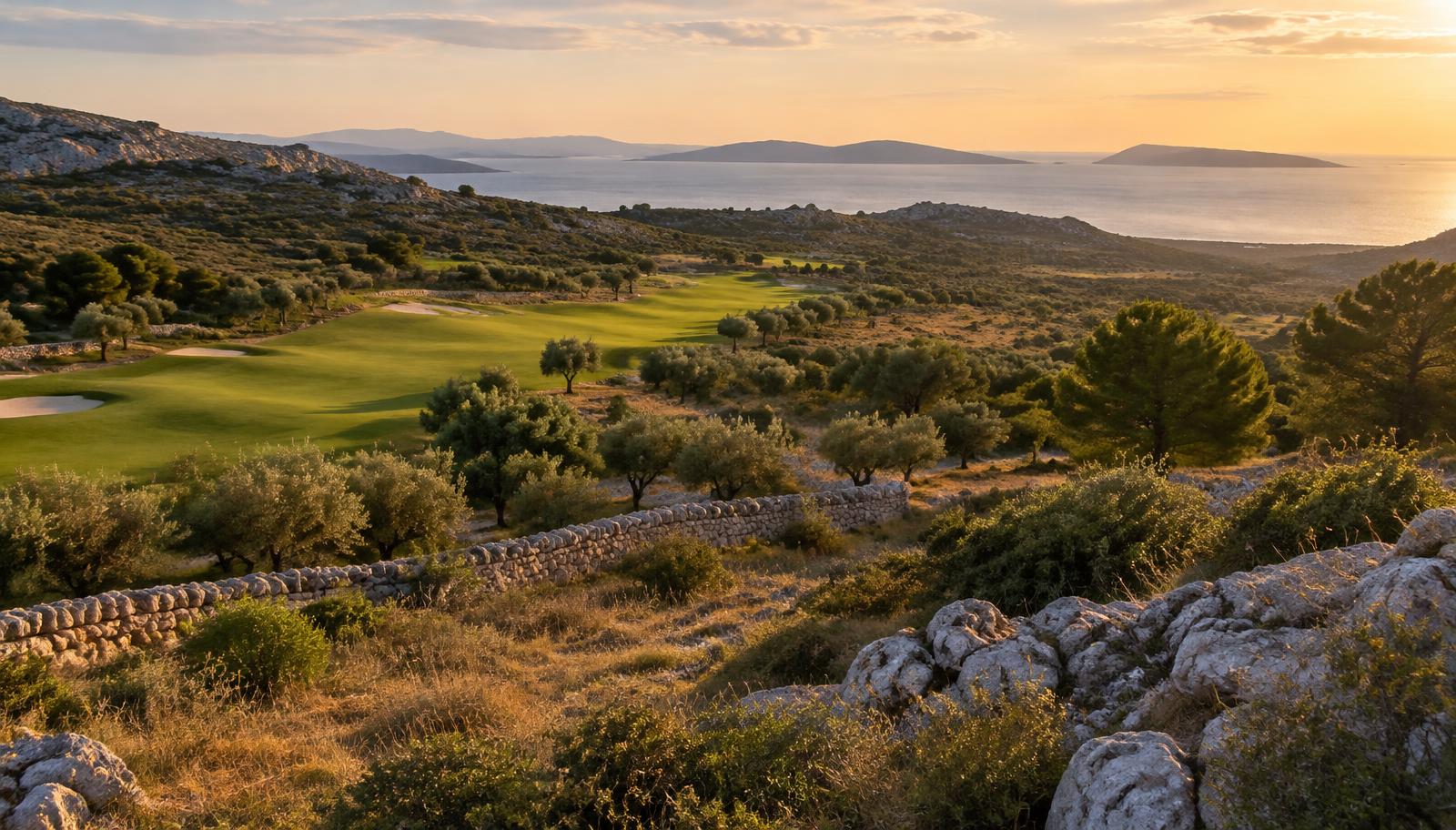
Few tourism products are discussed in Croatia as often, and delivered as rarely, as golf. For more than twenty years, national strategies have promised resorts that would extend the season and attract high-spending visitors. Yet the country still has only a handful of courses. The question for investors is not whether golf can be profitable, but under which conditions it makes sense on the Adriatic.
The economic case for golf
The argument in favour of golf is well established. Roughly 60 million people play the game worldwide on about 32,000 courses, and golf travellers tend to spend considerably more per day than the average tourist. Crucially for Croatia, the main golf seasons in the Mediterranean are spring and autumn, exactly the months in which coastal destinations struggle to fill beds.
Spain offers a useful benchmark. A peer-reviewed study of Spanish golf estimated the economic productivity of irrigation water used on courses at around 9 euros per cubic metre in direct course revenue, and around 28 euros per cubic metre when wider tourism spending is included. That is far higher than even high-value irrigated agriculture.
The question is not whether golf can be profitable, but under which conditions it makes sense on the Adriatic.
Why Croatia's golf plans have stalled
Croatia's tourism strategy for 2013 to 2020 foresaw around 30 golf resorts with roughly 40,000 beds. None were built in that period. According to the Ministry of Tourism and Sports, spatial plans across the country contain about 100 golf zones, but only one golf village with an 18-hole course and around 1,000 beds has been completed in more than twenty years. The government's own action plan, prepared by the Institute for Tourism, states plainly that, because of the small number and dispersion of courses, Croatia is not currently a golf destination.
The reasons are mostly structural rather than commercial:
- 1.
Spatial planning
Golf zones have been planned on building land, which means communal fees and water charges can be levied on 60 to 120 hectares of turf as if it were built floor area. The Croatian Golf Federation describes this as the single largest obstacle.
- 2.
Land ownership
Large, contiguous plots with clear title are rare. Fragmented private ownership and state land require long and uncertain assembly processes.
- 3.
Plan inflation and public scepticism
Dozens of designated sites, many of them never realistic, have fed a public perception that golf is a cover for real estate speculation. That perception now shapes local permitting and public consultation.
Academic research reaches a similar conclusion: optimistic strategies are not enough. Each project needs its own rigorous assessment of market, economic, ecological and socio-cultural impacts.
Water: the decisive variable
On the Mediterranean coast, water is not a technical detail, it is the business plan. In the Algarve, scientists using satellite and weather data estimated that around 40 courses use some 18 million cubic metres of irrigation water per year, much of it from boreholes. In Spain's Murcia region, one of the driest in the country, golf has expanded during declared droughts, and one resort has been investigated for allegedly extracting 2 million cubic metres a year through illegal wells.
Croatia has already had its own warning. During the 2012 drought in Istria, the county restricted public water use, and it emerged that the region's only completed golf course was being irrigated with drinking water from the public supply, despite spatial plans requiring alternative sources.
The Spanish data also shows the way forward. Around 41 percent of the water used on Spanish courses comes from treated wastewater and a further 7 percent from desalination. In Croatia, the planned project on the island of Cres has been permitted only on the condition that courses are irrigated with desalinated seawater, while public supply is reserved for accommodation.
A golf project on the Adriatic that cannot show a credible non-potable water source should not be financed.
Land, landscape and biodiversity
An 18-hole course typically occupies 60 to 100 hectares or more. On the Croatian coast, that land is usually karst, garrigue, olive groves and dry-stone terraces, landscapes that are part of the region's identity and of its appeal to visitors. Replacing them with uniform irrigated turf removes exactly what makes the destination distinctive.
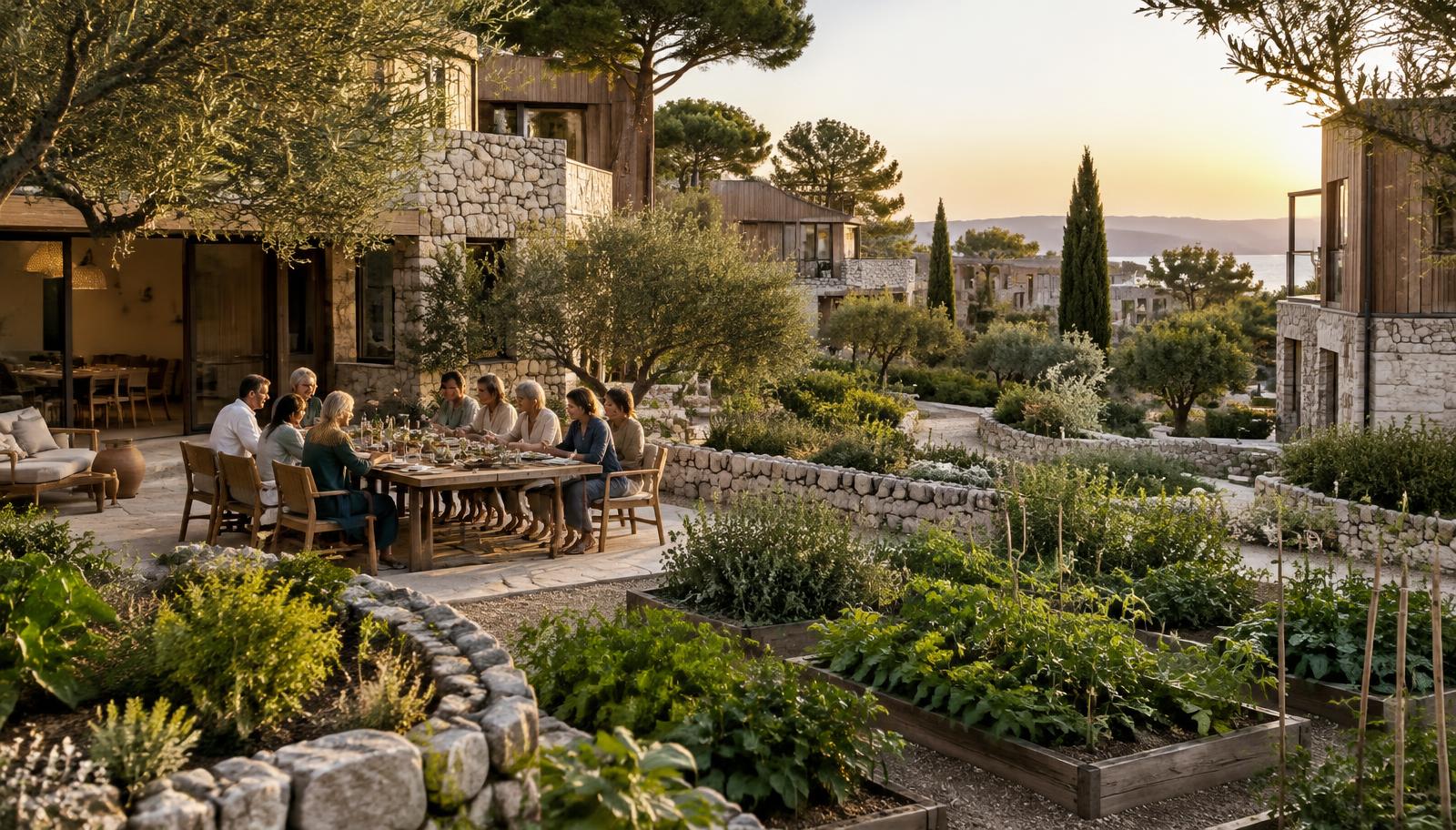
Better approaches exist. Modern course design can reduce irrigated turf to the playing corridors, keep native vegetation in the roughs, preserve dry-stone walls and drainage patterns, and treat the remaining land as managed habitat. The Cres project, for example, requires that at least 65 percent of the total area remains entirely natural and unbuilt.
What a viable model could look like
International experience suggests that a course on its own rarely carries its costs. What works is golf as one component of a broader destination. Based on the evidence above, we see six conditions for a commercially and environmentally credible project in Croatia:
- A secured non-potable water source (treated wastewater or desalination) before planning approval, not after.
- Reduced irrigated turf and native landscape design that keeps the local character visible.
- A diversified year-round offer: wellness, walking and cycling, food and wine, culture and events, so the business does not depend on golf alone.
- Accommodation density that the local infrastructure, roads and labour market can actually support.
- Genuine public benefit: access to paths and landscape, local employment and supply chains, and transparent agreements with the municipality.
- Independent environmental and market studies, published early, to build trust rather than defend a decision already taken.
What this means for investors
For investors, the opportunity in Croatian golf is real but narrow. The demand side is promising, and the absence of a competitive golf cluster is a gap, not only a weakness. But the risk sits almost entirely in planning, water and community acceptance. Projects that address these three factors from day one can move faster and attract better financing. Projects that treat them as afterthoughts will join the long list of plans that never left the drawing board.
This is, in essence, the philosophy behind BIOPHILIA: development that is commercially sound because it respects the place and the people around it.
Let's discuss your project
Are you evaluating a destination, hospitality or residential project in Croatia or the wider region? We are glad to share our perspective on feasibility, water, land and community questions.
Get in touchSources
Figures are taken from the sources below as published. Where sources are several years old, they are cited as context, not as current market data.
- Institute for Tourism / Ministry of Tourism of Croatia (2017): Action Plan for the Development of Golf Tourism
- Ministry of Tourism and Sports of Croatia (2019): Croatia needs golf tourism because of its multiplicative effects
- Ministry of Tourism and Sports of Croatia (2022): 100 years of golf in Croatia marked on Brijuni
- Croatian Golf Federation (2021): Institutional obstacles to golf development
- Bartoluci, Hendija, Barišić (2017): Perspectives of golf tourism development in Croatia
- Rodríguez Díaz, Knox, Weatherhead (2007): Competing demands for irrigation water, golf and agriculture in Spain. Irrigation and Drainage
- BBC News (2014): Algarve golf courses' growing thirst
- Worldcrunch / elDiario.es (2024): Uproar in Spain as golf expands in drought-stricken Murcia
- tportal (2012): Drought in Istria does not remove golf from county plans
- Novi list (2018): Two courses, 800 beds and desalinated water, the planned golf project on Cres
BIOPHILIA Editorial Team
Beyond the Development is BIOPHILIA's editorial series on responsible property and destination development, with Croatia as its initial focus. Each article tests its assumptions against evidence rather than simply supporting our own philosophy.