Beyond the Development · Analysis
Beyond the Summer Season: Can Croatia Build Destinations That Thrive Year-Round?
An examination of the opportunities, economics and development models behind reducing Croatia's dependence on seasonal tourism.
By BIOPHILIA Editorial Team · 14 October 2026 · 9 min
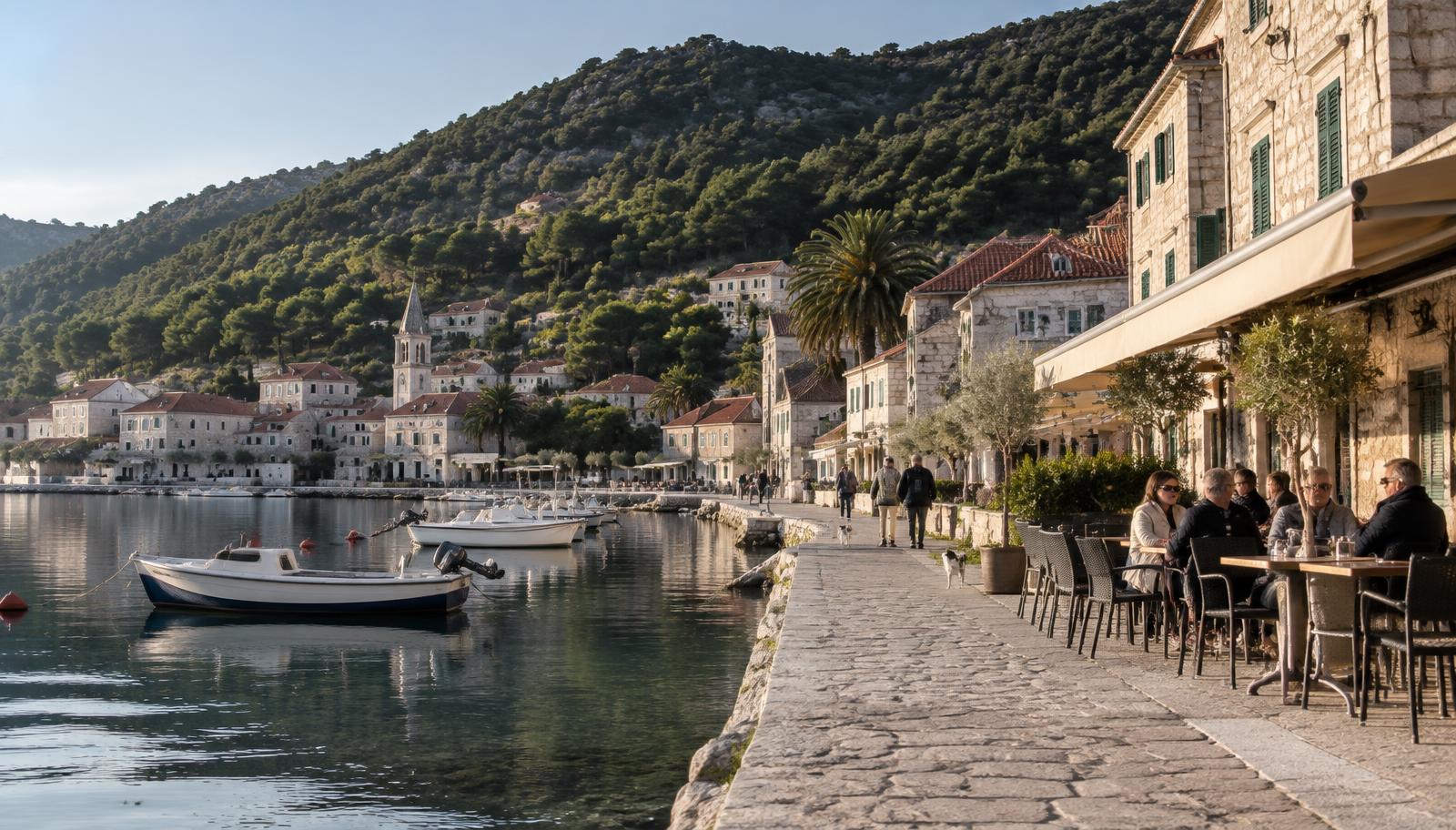
Croatia is one of the Mediterranean's great tourism success stories. It is also, by a wide margin, the most seasonal tourism country in Europe. For hospitality operators, property investors and coastal communities, that concentration shapes almost everything: returns, jobs, prices and the quality of everyday life. The question is whether a different approach to development can create places that people have a reason to visit, and to live in, all year.
How seasonal is Croatia, really?
According to Eurostat, 31 percent of all tourist nights in the EU fell in July and August in 2025. In Croatia the figure was 54.5 percent, ahead of Bulgaria at 43.4 percent and Greece at 41.6 percent. In August, Croatia recorded 41.1 times as many overnight stays as in January; the EU average ratio was 3.6.
The picture has improved slightly over time. In 2018, the share of July and August was around 59 percent, and Croatia was the only country in Europe to record less than one percent of its annual tourist traffic in January and February combined. But the overall pattern has remained remarkably stable for more than a decade.
A successful destination needs more than attractive buildings. It needs a compelling reason for people to be there.
What seasonality costs
Seasonality is not only a statistic. It has concrete economic consequences for everyone involved:
- 1.
For operators
Fixed costs run for twelve months, revenue arrives in three or four. Average annual hotel occupancy was reported at around 43 percent in 2018 and private accommodation far lower. That gap is paid for by summer prices.
- 2.
For investors
Short operating windows mean higher risk, higher yield expectations and more difficult financing, particularly for anything beyond simple holiday rentals.
- 3.
For communities
Seasonal work makes it hard to keep skilled people, while summer congestion strains water, roads and waste systems. In winter many coastal places empty out, along with their shops, restaurants and sometimes medical services.
Why more beds do not solve it
The instinctive answer to seasonality is to build better accommodation, typically more hotels. Hotels do perform better than private rentals outside the peak, and Croatia's hotel share of total beds is low. But a hotel on its own does not create a reason to travel in February. Guests come for something: an event, a landscape to walk in, a wellness programme, a conference, family, work. If the surrounding place is closed, the hotel is closed too, in practice if not on paper.
This is also why simply converting more land into holiday apartments tends to deepen the problem. Those units are designed, priced and financed for July and August. They add pressure in the peak and stand empty for the rest of the year.
Which kinds of demand travel off-season?
Evidence from other Mediterranean destinations points to a fairly consistent set of off-season demand drivers. None of them is new, but they only work when combined and properly supported:
- Outdoor recreation: cycling, hiking, trail running, sailing and golf, which are most comfortable in spring and autumn.
- Wellness and health: programmes that rely on climate, nature and quiet rather than on beach weather.
- Culture, food and wine: harvests, festivals and local traditions that happen outside the summer.
- Remote work and longer stays: professionals who stay weeks or months, if connectivity, workspace and community are in place.
- Meetings, retreats and education: small groups that prefer calmer months and lower prices.
Lessons from other Mediterranean destinations
Mallorca: decades of patient product building
The Balearics recognised their seasonality problem in the 1980s and made sports tourism, especially cycling and golf, central to their off-season strategy. Forty years later, the hoteliers' federation estimates that up to a quarter of establishments open all year, and sports tourism has extended the season into November and restarted it from mid-February. The government's Better in Winter programme has also co-funded off-season events and products. The lesson: it works, but slowly, and only with consistent products and events.
Madeira: remote work without community
Madeira's digital nomad village was widely celebrated as a fast answer to empty months. Reporting in WIRED described how the project, which promised community to newcomers and prosperity to locals, struggled to deliver either. Remote workers came, but integration, housing pressure and a lack of shared purpose with the local population quickly became visible. The lesson: attracting people is easier than building a place they and the existing community share.
Spain more broadly shows that diversification across seasons and regions is achievable. Inland and nature-based destinations are growing faster than the classic sun-and-beach regions, and the established coastal regions now focus on stabilising summer while growing the rest of the year.
The infrastructure behind year-round life
A destination that wants guests in winter must work for people in winter. That sounds obvious, but it is where many plans fail. Year-round viability depends on factors that rarely appear in a tourism brochure: flight and ferry connections outside summer, a nearby doctor or clinic, a pharmacy, a grocery store that stays open, reliable broadband, schools for families and a resident population that keeps services alive.
These are not tourism questions; they are questions of place. And they are why the discussion about seasonality inevitably becomes a discussion about how and where people live.
Mixed-use: a more resilient model?
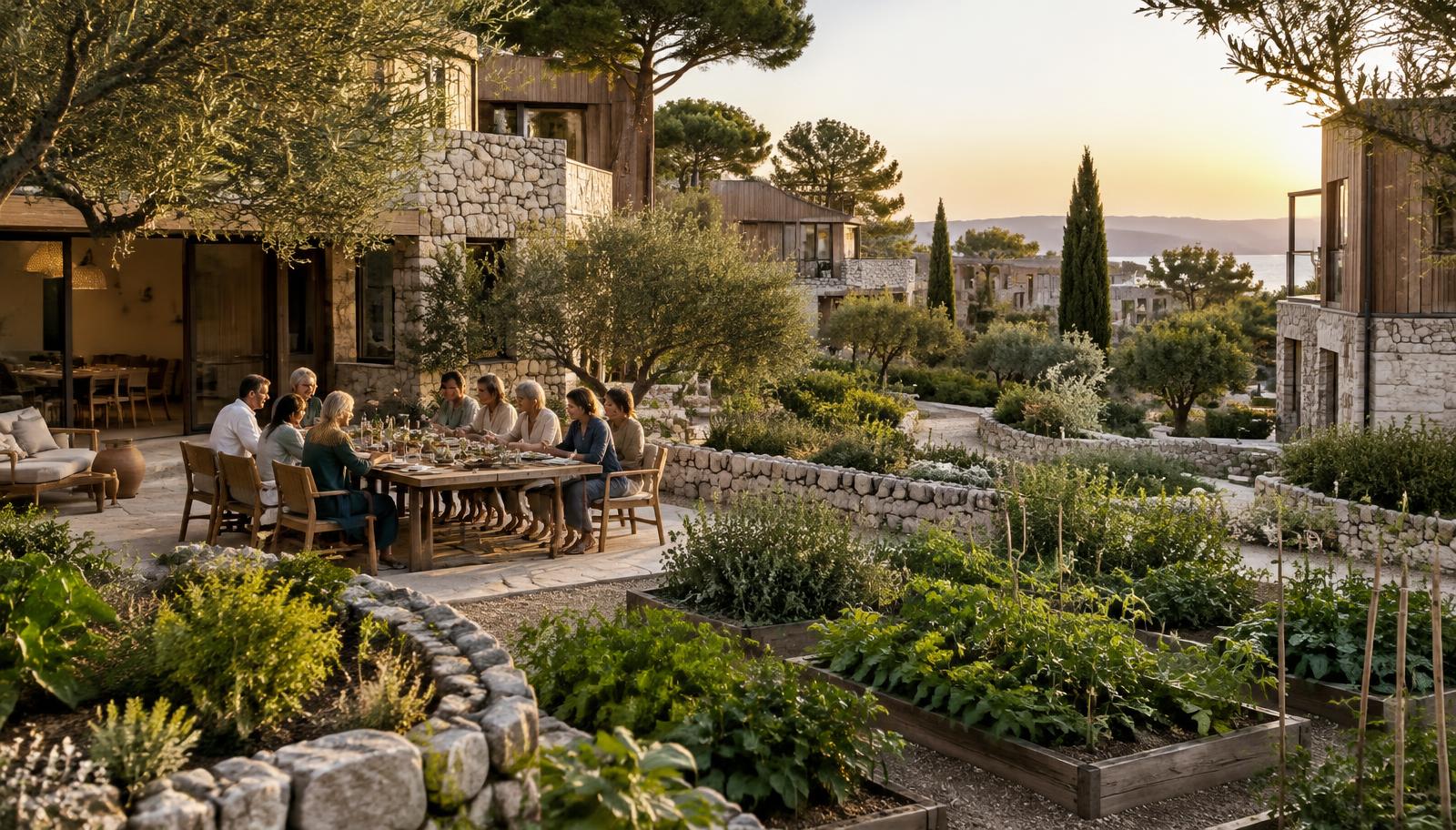
One answer is to plan developments that combine hospitality, permanent or long-stay residences and recreation in one coherent place. Residents keep restaurants, shops and services open in the off-season. Guests support the businesses that residents enjoy. Recreation and nature give both groups a reason to be there beyond the beach.
This model is not automatically better. It is more complex to plan, finance and manage, and residential and tourism uses can conflict if density, noise and access are poorly designed. It also requires an operator who thinks in decades, not seasons. But where it is done carefully, the business does not stand or fall with eight weeks of summer.
What this means for investors and landowners
- Ask what brings people in March and November before asking how many units the land can hold.
- Underwrite off-season demand separately, with conservative assumptions, rather than averaging it into summer figures.
- Check the year-round basics: access, healthcare, services and connectivity. If they are missing, plan for them or factor in their absence.
- Favour a mix of uses and guest types over a single product, even if peak-season yield is slightly lower.
- Work with the local community from the start. Year-round places need year-round people.
This continues the argument of our first article on golf tourism: a single product rarely creates a destination. A destination is the result of many reasons to be in one place, and of the people who stay there when the visitors leave.
Let's discuss your project
Are you evaluating a hospitality, residential or mixed-use project in Croatia or the wider region? We are glad to share our perspective on year-round viability, infrastructure and community.
Get in touchSources
Figures are taken from the sources below as published. Older sources are cited as context, not as current market data.
- Eurostat (2026): Summer peak, 31% of tourism nights in August and July
- Eurostat Statistics Explained: Seasonality in the tourist accommodation sector
- Croatian National Tourist Board (2020): Analysis of seasonality of tourist traffic in Croatia
- Total Croatia News / Poslovni dnevnik (2020): Croatia is European record holder for seasonality
- Buturac, Rašić, Institute of Economics Zagreb (2024): Sector Analyses, Tourism
- Majorca Daily Bulletin (2023): Sports tourism key to the growth of the off season
- Interreg Europe (2018): Better in Winter promotional strategy, Balearic Islands
- Majorca Daily Bulletin (2025): Mallorca becomes top destination for remote workers
- WIRED (2022): Welcome to Digital Nomadland, the Madeira remote-work village
- Forbes España (2026): The off-season boom, freeing tourism from the calendar
BIOPHILIA Editorial Team
Beyond the Development is BIOPHILIA's editorial series on responsible property and destination development, with Croatia as its initial focus. Each article tests its assumptions against evidence rather than simply supporting our own philosophy.