Beyond the Development · Analysis
Buying Property in Croatia: Completed Property or Off-Plan Investment?
Two routes to ownership, with different timelines, funding needs and risks.
By BIOPHILIA Editorial Team · 25 November 2026 · 8 min
Buying completed or off-plan property in Croatia is not simply a choice between certainty and opportunity. Both can make sense. The useful question is which risks you are equipped to carry, when you need the property and how much of the purchase you can verify before committing.
Two routes, different kinds of certainty
Buyers looking at Croatian residential property often encounter two apparently comparable offers: an apartment they can walk through today and a future home represented by drawings, specifications and a delivery schedule. They may have similar floor areas and equally persuasive views. The commitments behind them are different. One is primarily the acquisition of an existing asset; the other includes exposure to a development process that still has to produce that asset.
The first question is what the property needs to do for you. A family seeking a second home for next summer, an investor who needs a dependable income start date and a buyer with several years of flexibility should not apply the same priorities. Price matters, but it cannot be understood separately from time, liquidity and the consequences of a delay.
What a completed property lets you inspect
With a completed property, the most useful advantage is not a marketing label such as ready to move in. It is the opportunity to examine the real thing. Walk through the rooms at different times of day. Check how the terrace connects to the interior, whether neighbouring buildings affect privacy and how a view changes when you are seated rather than standing. A rendering rarely answers those questions.
An independent technical inspection can examine visible workmanship, signs of moisture, ventilation, equipment, acoustic conditions and maintenance needs. The common areas deserve the same attention as the apartment. Who maintains the exterior, what shared equipment exists, and are there unresolved defects? Completion reduces future construction exposure but does not eliminate quality, ownership or operating risk.
What off-plan can offer
Off-plan buying can offer a choice of units before the best-suited layouts are allocated, possible changes to finishes and a payment schedule tied to development milestones. Early pricing may be attractive, but a discount is neither automatic nor proof of value. Compare the total commitment with realistic alternatives, including the cost of money held in the project and the consequences of delivery later than expected.
The buyer must also evaluate who will deliver the property and how the project is funded. Ask which permissions are already in force, whether the seller owns or controls the site, and what protects payments if the developer or contractor cannot perform. A contractual promise and an enforceable security arrangement are not the same thing. Independent counsel should explain the actual protections, exclusions and recovery options.
Personalisation has limits. A choice of tiles is not permission to change structural design, building services or the planning-approved layout. Confirm the specification, variation procedure and price consequences in writing. Renderings may communicate intent without becoming binding contractual obligations.
Compare the full commitment, not just the asking price
A fair comparison separates purchase price from transaction costs, financing, furnishing, running costs and the value of delayed use. Completed properties often require a larger payment at closing, while some off-plan contracts stage payments. Neither pattern is universal. A bank’s willingness to finance one asset does not establish that it will finance another under the same conditions.
Use the comparison below as a conversation framework, not a fixed rule. The individual contract and the property’s legal status determine which risks actually sit with the buyer.
| Dimension | Completed property | Off-plan property |
|---|---|---|
| Capital and payments | Often concentrated at completion of purchase; financing varies. | May be staged; deposits and funding protection require scrutiny. |
| Construction risk | Less future delivery exposure; defects remain possible. | Delivery, funding and developer performance remain material. |
| Inspection | Actual rooms, finishes and surroundings can be examined. | Plans, specifications and site progress need verification. |
| Use and rental | Earlier start possible only with lawful and operational readiness. | Depends on completion, approvals and operational setup. |
| Design flexibility | Usually limited by existing construction. | Possible within approved design and written variation terms. |
| Finance and legal status | Check title, unit status, occupancy and financing conditions. | Also check permits, payment security and completion remedies. |
| Horizon and exit | Existing resale asset, but liquidity is not assured. | Longer uncertainty; assignment rights and exit limits depend on contract. |
The checks that matter in Croatia
Begin with the land-register extract and the identification of the property being transferred. Confirm the owner, encumbrances, relevant rights and whether the apartment is a separately identifiable legal unit. Compare land-registry and cadastral information with the physical building. A mismatch is a question to resolve, not a detail to leave until after paying a deposit.
Check the building authorisation and the applicable occupancy documentation, including whether the constructed property corresponds to those documents. Physical completion is not equivalent to lawful occupancy. A building appearing in cadastral records is not, by itself, confirmation that all permissions exist. Ask an independent Croatian lawyer and a suitable technical professional to assess the actual file.
For contractual acquisition, ownership is obtained through land-register registration, not through signing the sale agreement alone. Clarify the registration mechanism, required seller authorisation and payment protections. Reservation agreements and preliminary contracts can have significant consequences; obtain advice before treating them as an informal way to hold an apartment.
Personal use is not the same as tourist letting
A home can be attractive for personal use without being legally or commercially suitable for tourist accommodation. Tourist letting requires the applicable approvals and operating arrangements. In an apartment building, short-term letting can also engage specific co-owner consent requirements. Existing accommodation approvals should be examined rather than assumed to transfer unchanged to a new buyer.
Even where rental use is permitted, evaluate seasonality, cleaning, maintenance, insurance, management, utilities, local obligations and downtime. The ability to begin letting earlier can favour a completed property, but it is a possibility contingent on legal and operational readiness, not a guaranteed revenue stream. Our year-round destinations analysis provides useful context without predicting an individual apartment’s income.
Which route fits your objectives?
A completed property may suit someone who needs to inspect the final environment, prefers an earlier path to personal use and does not want development-stage exposure. The trade-off can be less flexibility in layout and specification, alongside a different initial funding requirement. Some buyers will reasonably pay for that greater visibility rather than pursue an uncertain early-entry saving.
Off-plan may suit someone with a flexible timetable, sufficient financial reserves and an informed tolerance for construction and developer risk. The buyer should understand the remedies for delay, specification changes, missed milestones and failure to complete. A household with no spare liquidity should not rely on an optimistic handover date to make the purchase affordable.
In both cases, plan an exit before committing. Consider the depth of the resale market, restrictions on assignment before completion, transaction costs and what happens if your circumstances change. A property that serves your lifestyle well is not necessarily a liquid investment, and the opposite can also be true.
BAIA.HOUSE: evaluating the actual property
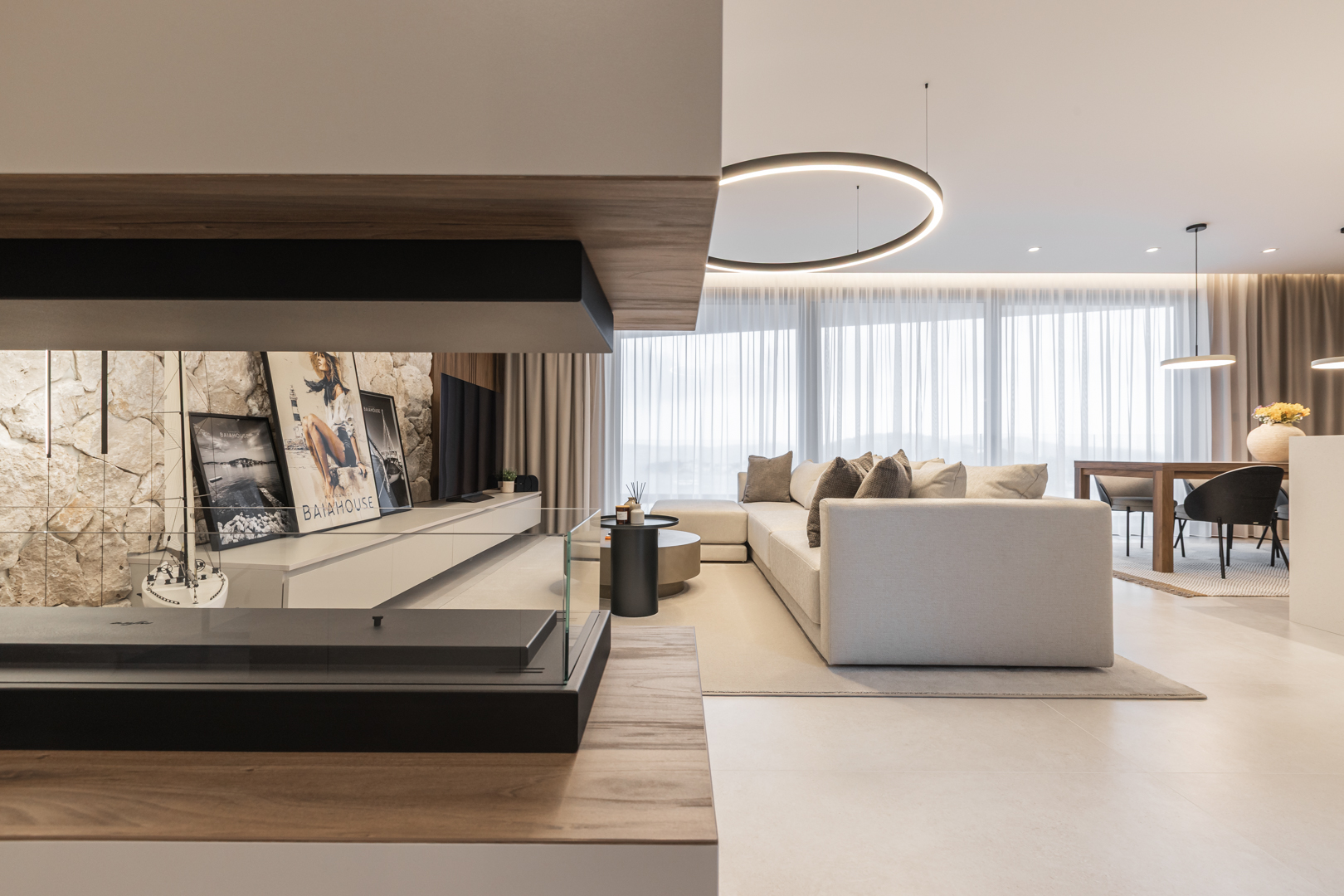
BAIA.HOUSE is a completed residential apartment project in Rogoznica on Croatia’s coast. It provides a practical example of the inspection-led route: prospective buyers can evaluate the architecture, interior spaces and setting as they exist, rather than making their decision exclusively from a future vision. The project is relevant because of that distinction, not because completed property is always the right answer.
Current availability, pricing, the scope of the sale and legal documentation should be requested for the particular apartment. A private viewing is an opportunity to ask precise questions about finishes, shared areas, maintenance and intended use. No rental return, tax advantage or investment outcome follows automatically from a completed building. The best decision is the one that fits your objectives and stands up to independent checks.
Explore the opportunity
Explore BAIA.HOUSE, request current availability and pricing, or arrange a private viewing. Bring your intended use and timetable so the discussion can focus on the right questions.
Get in touchSources
Official guidance checked on 14 November 2026. Recheck rules at the time of purchase. General editorial information, not individual legal or tax advice.
BIOPHILIA Editorial Team
Beyond the Development is BIOPHILIA’s editorial series on responsible property and destination development. We connect commercial judgment with the realities of people, place and long-term ownership.