Beyond the Development · Analysis
A Different Way of Living: Rethinking the Relationship Between Home, Nature and Community
A more connected life does not necessarily mean more communal living. It starts with asking what a home should make possible, and what it would take to sustain it.
By BIOPHILIA Editorial Team · 17 January 2027 · 8 min read
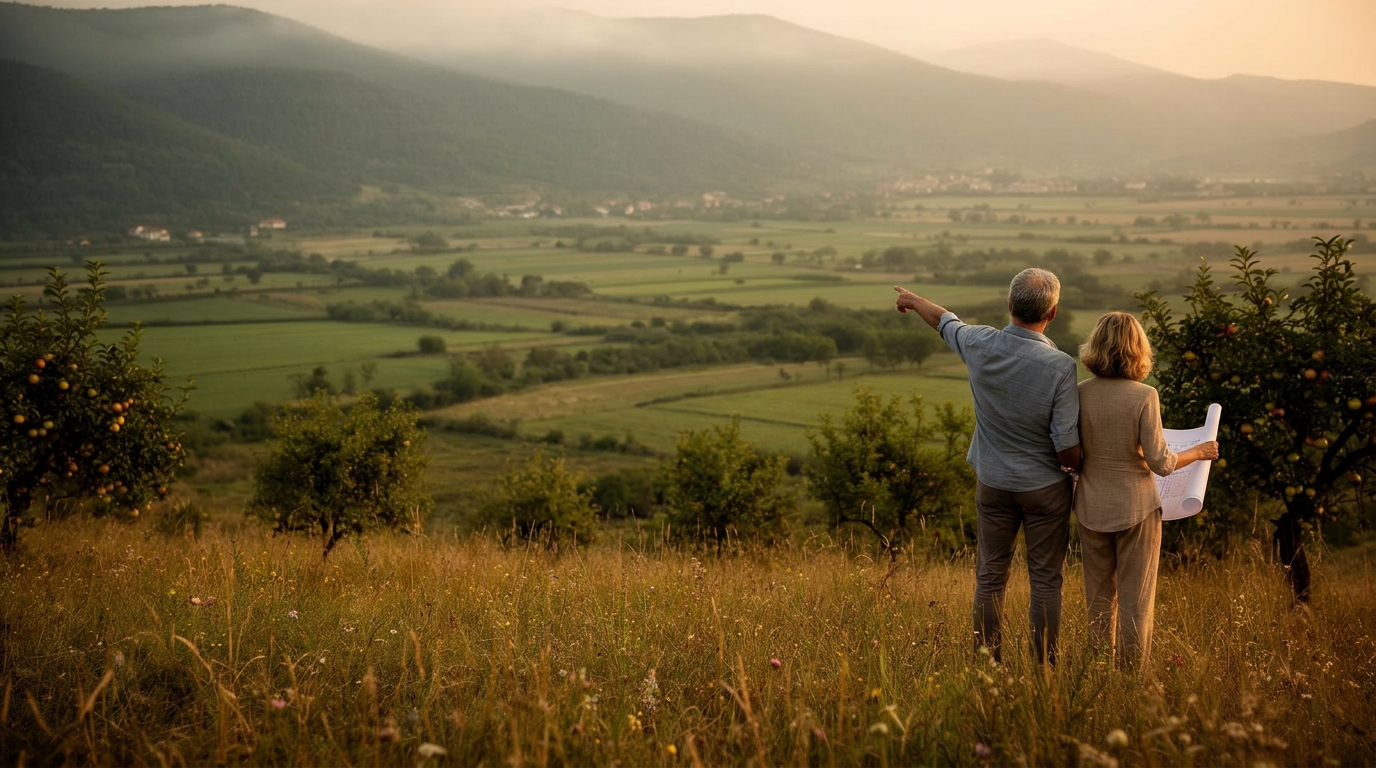
What do we actually want a home to make possible? A quiet morning, reliable work, room for children, a conversation that happens without arranging it weeks ahead? Alternative ways of living become interesting when we move beyond the image of a beautiful house and examine the everyday life around it.
1. The home is only part of the decision
Residential decisions often begin with measurable things: floor area, bedrooms, distance from an airport, purchase price. Those matter. But they are proxies for something more personal. A household is trying to organise its time, relationships, work and resources. A larger property can still leave its residents short of time, dependent on driving or disconnected from people they would like to see.
Changing work patterns make some choices possible, but not universally. A remote professional may have geographical flexibility while their partner does not. A diaspora family may want longer stays near relatives without being ready to relocate. Parents, single adults and older residents may value very different kinds of proximity. There is no reason to assume that everyone wants to leave the city, or that a nature-oriented setting is automatically a better home.
2. Nature matters most when it is part of an ordinary day
A landscape can be a view, or it can shape daily habits. The difference may be a shaded walking route, somewhere to sit outside, accessible ground, or a garden that does not demand more work than its residents can manage. Everyday contact with nature is less about occasional spectacle than whether going outdoors feels easy in ordinary weather and within an ordinary schedule.
The World Health Organization's review of urban green spaces discusses pathways through which green space may support health, including physical activity, social contact and relief from environmental stressors. A 2019 study in Scientific Reports found an association between spending at least 120 minutes a week in nature and self-reported health and wellbeing. That was observational evidence, not proof that a particular residential concept produces better health, and not a prescription for every individual.
The practical lesson is modest: make access useful. Shade, safe routes and places to rest may matter more than expansive landscaping. Seasonal rhythms also bring heat, rain, insects, maintenance and periods when outdoor life is less comfortable. A credible nature-oriented environment plans for those realities rather than cropping them out of the picture.
3. Connection should not require constant participation
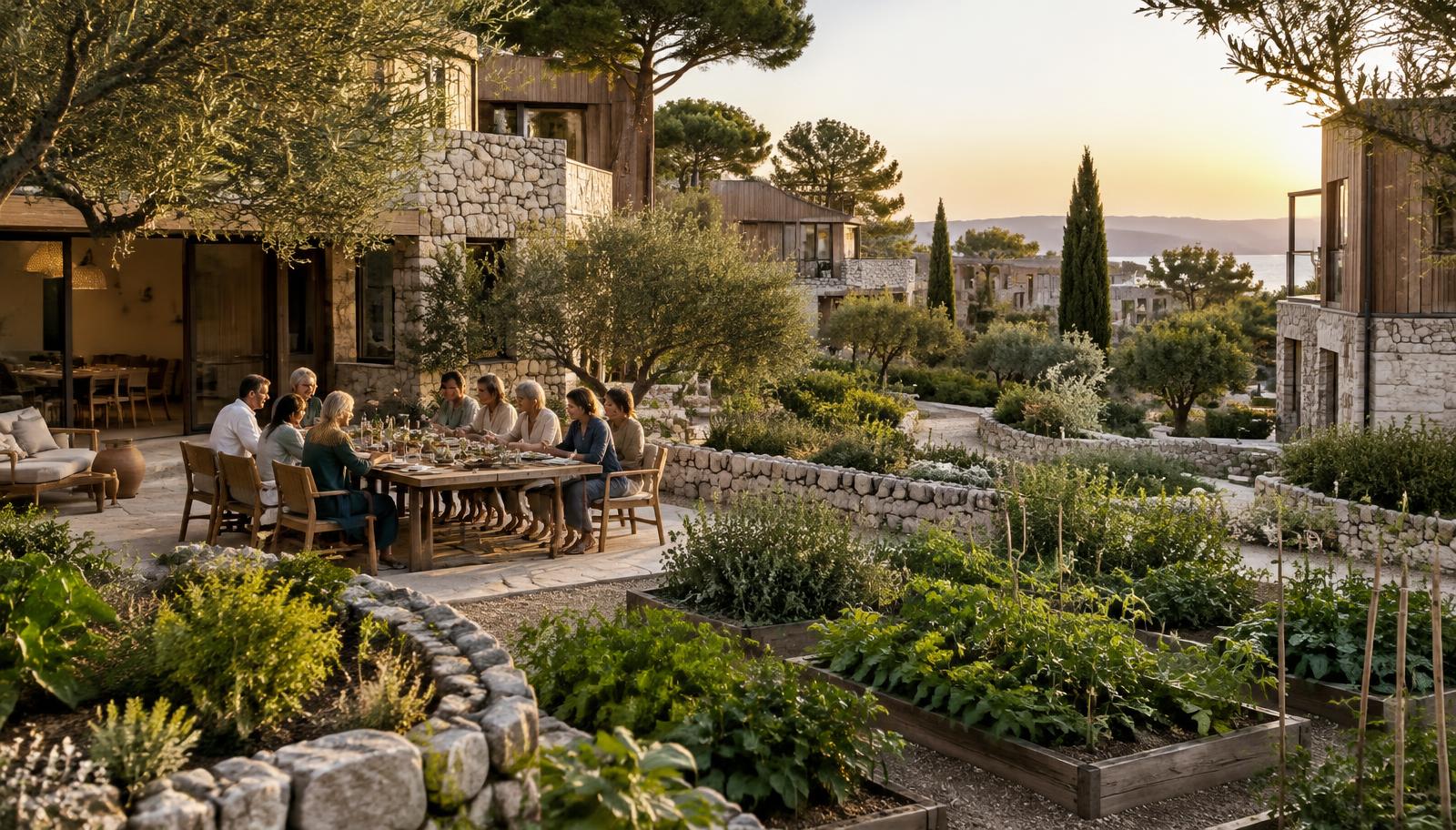
Living near people is not the same as agreeing to a communal lifestyle. Someone may welcome a shared meal once a month and still want a private entrance, acoustic separation and no expectation to explain their absence. Privacy is not the enemy of community. It can be what makes participation feel voluntary and therefore sustainable.
Architecture can create opportunities through paths, thresholds, gardens and modest shared rooms. It cannot guarantee friendship, compatible values or fair behaviour. Rules about guests, noise and access matter as much as the inviting photograph. Our existing article on community in residential development considers the real-estate implications; here, the more personal question is whether a place allows both connection and retreat without making either feel like a failure.
4. Beyond housing, but not beyond operational reality
An integrated living environment could bring homes into a closer relationship with workspaces, small-scale production, learning and outdoor experiences. A quiet room for calls might reduce unnecessary journeys. A workshop or growing area might support useful skills and local activity. Shared infrastructure could make some facilities accessible without every household having to own and maintain a separate version.
Yet proximity also creates friction. Production may mean deliveries, noise or equipment. Visitors can enliven a place while changing its privacy. Shared facilities cost money even when few people use them. The attractive idea of integration becomes credible only when someone can explain who manages each activity, who pays, what happens when it underperforms and how residents can challenge decisions.
The test is not whether a place looks like a different way of living. It is whether ordinary life there would actually work.
5. Different people will need different arrangements
A full-time household needs dependable services in February as much as in August. A seasonal resident may prioritise security and straightforward maintenance while away. A remote professional needs reliable connectivity and genuinely quiet work space. Families need realistic education and care arrangements, while an entrepreneur may need customers, storage or permission for a particular activity. These are distinct requirements, not interchangeable lifestyle labels.
Venture participants and property investors bring another set of questions about responsibility, risk and income. Their interests may overlap with residents' interests, but not automatically. High visitor turnover, for example, can conflict with continuity. Any future model would need to explain which forms of participation can coexist, how costs are allocated and whose needs take precedence when expectations collide. Flexibility is useful only if the underlying arrangements are clear.
6. Different Way starts with listening
Different Way is an exploratory demand-listening initiative. Its starting point is not a finished development offered to prospective buyers, but a question: is there genuine demand for a more integrated, nature-oriented living environment, and what would people need from it? Gathering feedback before committing to a location or model can reveal priorities that attractive concept imagery cannot.
The initiative is organised around six conceptual pillars. These describe areas to investigate, not a confirmed list of amenities or a promise that every activity will be delivered in one place.
- Living: private homes and everyday routines that accommodate different household needs.
- Producing: exploring how useful work, growing or small-scale enterprise might fit the setting.
- Experiencing: opportunities to encounter nature, place and shared activities without compulsory participation.
- Learning: exchanging knowledge and developing skills across ages and backgrounds.
- Protecting: considering how landscape, resources and local character could be cared for.
- Operating: making management, maintenance, responsibilities and recurring costs part of the concept from the beginning.
No final site, development structure, tenure or ownership model, prices or implementation timetable have been confirmed. Expressing interest is therefore not the same as assessing an available property or committing to an investment. The value of this stage is to learn where expectations converge, where they conflict and whether a workable proposition can emerge at all.
7. The questions that make an idea credible
The difficult questions are not a distraction from the vision. They are how the vision becomes testable. Affordability means more than an entry price: it includes transport, utilities, maintenance, shared charges and the time residents might be expected to contribute. Environmental intentions likewise need evidence about land use, water, energy, materials and mobility, rather than the assumption that a green setting makes development sustainable.
- Location and access: how would people reach work, shops and transport connections, including without a car?
- Healthcare and education: which services would be realistically available throughout the year, and at what travel cost?
- Infrastructure and connectivity: could water, wastewater, energy and internet systems support everyday demand and seasonal peaks?
- Ownership and exit: what rights, obligations, transfer conditions and departure options would each participant have?
- Governance and privacy: who would decide on shared budgets, visitors, commercial activities and disputes?
- Financial sustainability: how would operations, replacement reserves and unexpected costs be funded if participation or occupancy were lower than hoped?
Answers will depend on the eventual location and structure, with appropriate technical, financial and legal assessment. For now, uncertainty should be stated rather than disguised. A concept becomes stronger when it can identify a condition that would make it unworkable, not only the conditions under which it would be attractive.
8. Start with your ordinary Tuesday
Imagine a weekday rather than a holiday. Where do you work? Who needs a lift? What happens when someone is ill, the weather changes or you want to be alone? Then imagine the same day five years later. A meaningful alternative should accommodate changing circumstances, not depend on everyone remaining permanently enthusiastic, healthy and available.
Write down three essentials, three preferences and three responsibilities you would not want to take on. Consider what you could share comfortably and what must remain private. That is a more useful contribution than simply saying that you like nature and community. The future of housing may include more integrated ways of living, but the strongest versions will be shaped by honest limits as much as shared aspirations.
Share what a different way of living would mean for you
If you are interested in exploring a different relationship between home, nature and community, discover the Different Way initiative and share your perspective through its questionnaire. Practical needs, reservations and deal-breakers are as useful as enthusiasm.
Discover Different Way and share your perspectiveSources and further context
The research below provides context on nature and wellbeing, not evidence of outcomes for Different Way. The initiative's own material is identified as a primary source. This is an exploratory editorial, not an offer of property or investment.
BIOPHILIA Editorial Team
BIOPHILIA Editorial Team writes Beyond the Development, a series examining the decisions, responsibilities and everyday realities behind residential places.