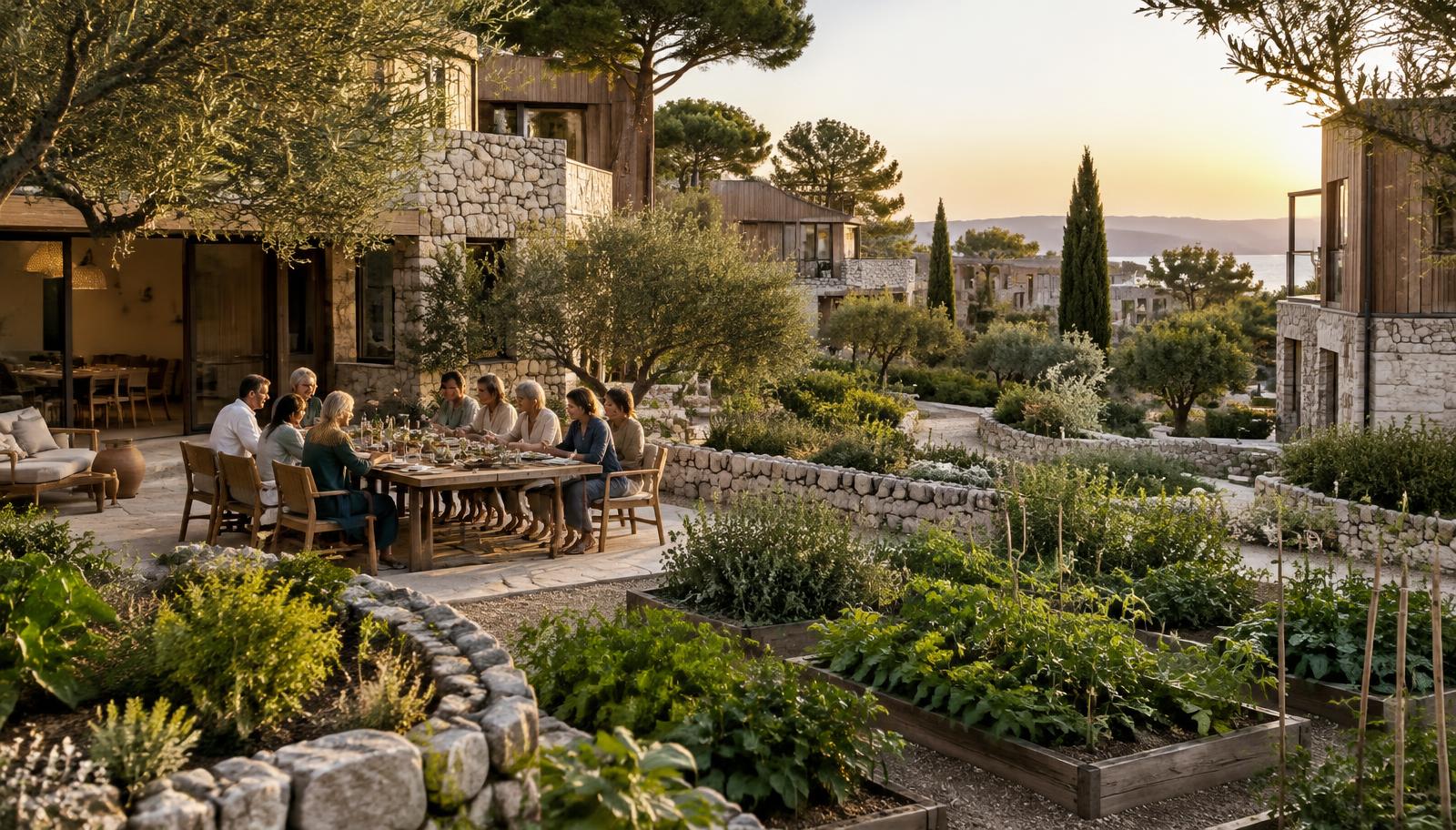
Beyond the Development · Analysis
You Own the Land. Now What? From Property Ownership to Development Opportunity
From property ownership to development opportunity: why the right first move is a strategy, not a building.
By BIOPHILIA Editorial Team · 4 January 2027 · 9 min read
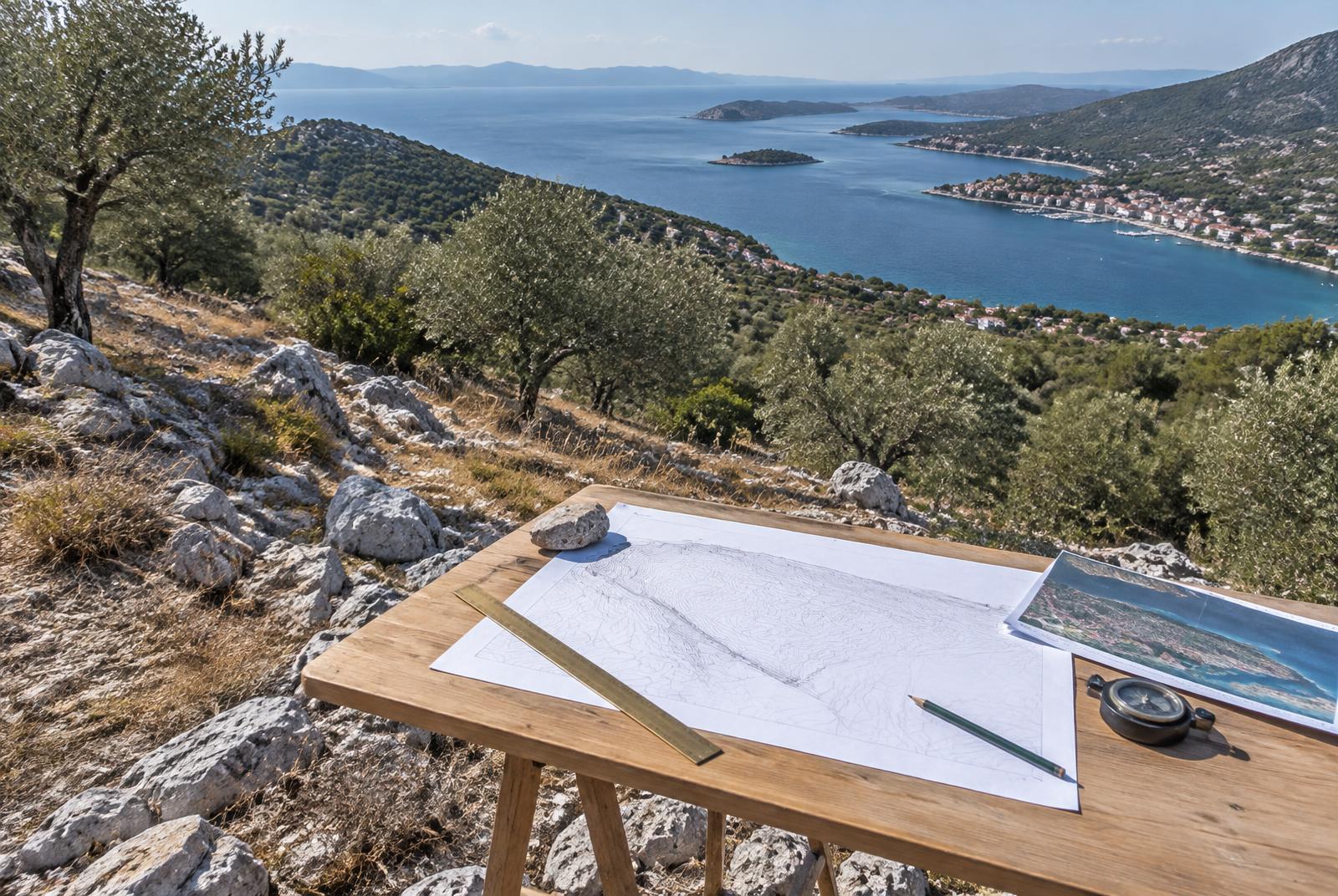
A family inherits land near the coast. An investor has held a hillside site for years. Someone suggests apartments; someone else knows a potential buyer. Suddenly, an asset that once seemed straightforward becomes a series of decisions about money, time and responsibility. The useful question is not simply what can be built. It is which course of action makes sense for this owner, on this land, under conditions that can actually be established.
1. Ownership is a starting point, not a development strategy
An attractive location can encourage premature certainty. A nearby development sells well, a broker offers an optimistic valuation, or a sketch makes the site look immediately buildable. None of these establishes the cost, permissions, demand or organisational effort required for a viable project.
For owners without development experience, the difficulty is often knowing which advice to commission first. Each specialist sees a different part of the problem. The owner's task is not to become every specialist, but to create a decision process that connects their findings. Choosing not to build can be a disciplined commercial decision, not a missed opportunity.
2. Start with the outcome the owner needs
Immediate liquidity and long-term value are different objectives. An owner needing money for family commitments may reasonably prefer a straightforward sale to a development with an uncertain completion date. Another may accept years of involvement to retain a property or establish a future income stream. Neither objective automatically produces the better financial result.
Write an owner brief before a design brief. Set out available capital, financing capacity, tolerable losses, desired involvement and the latest acceptable decision date. Include family and succession considerations: who owns the land, who can make decisions, and whether the owners agree. A strategy that depends on unanimous patience is fragile when one family member needs cash now.
3. Establish what the land can realistically support
Begin with a coordinated site review: ownership records and relevant rights, boundaries, lawful access, applicable planning conditions, infrastructure capacity, topography and environmental constraints. In Croatia, public spatial-planning and land-record systems are useful starting points. They do not replace current documents, site investigation or interpretation by qualified local professionals.
A hillside view may come with substantial excavation, retaining structures and difficult construction logistics. A road beside a parcel does not, by itself, resolve access. Nearby utility networks do not establish connection capacity or cost. Record each uncertainty, the evidence needed to resolve it, and who is responsible for obtaining that evidence.
Then test demand. Who would buy, occupy or operate the finished product, at what specification and under what conditions? Theoretical building potential is not commercial viability. A permitted quantity of space may still be expensive to deliver or poorly matched to the market. Legal, planning, tax and contractual conclusions require property-specific professional advice.
4. Compare five routes before choosing one
There is no universal ladder on which development is superior to selling. Compare the alternatives against the same owner objectives and evidence. Availability depends on the property, counterparties, financing and applicable legal framework; some routes may not be feasible at all.
- 1.
Sell the land in its current condition
This can limit further expenditure and transfer development responsibility to a buyer. The trade-off is accepting that the buyer will price unresolved risks into its offer. Prepare a clear information pack and compare the certainty and conditions of offers, not just headline prices.
- 2.
Improve investment readiness before selling
Clarifying ownership, access, planning information and initial feasibility can make an opportunity easier to assess. It costs time and money without guaranteeing a higher sale price. Agree a limited work programme and a spending ceiling rather than commissioning a full project speculatively.
- 3.
Develop independently
The owner retains greater control and exposure to the project's outcome. That also means arranging finance, appointing specialists and managing cost, delivery and sales risks. Land value is capital at risk even when the land was inherited and no purchase cheque was written.
- 4.
Bring in an investor or co-development partner
A partner may contribute capital, expertise or delivery capacity. In exchange, the owner shares control and economic benefits. Land valuation, funding obligations, decision rights and downside allocation need explicit agreement. A partnership does not eliminate risk; it changes how risk is shared.
- 5.
Retain ownership and explore a development or operating structure
An appropriately structured lease or another professionally assessed arrangement may suit an owner prioritising retention. Feasibility depends on local law, financeability, operator demand and the site's use. Counterparty failure, maintenance responsibilities and eventual handback conditions deserve as much attention as prospective income.
5. Define the strategy before committing to architecture
Architecture is essential, but a substantial design commission should answer a commercial and operational brief. Define the target market, plausible development concept, quality level, investment requirements and intended exit or retention strategy first. Otherwise, the owner may become attached to a design before understanding whether it serves the objective.
Early architectural input remains valuable for testing capacity and site constraints. Combine it with planning, engineering, cost and market advice in a proportionate feasibility exercise. Model the entire undertaking, including professional fees, infrastructure, financing assumptions, contingencies and the time required to sell or stabilise operations. Test weaker demand, higher costs and delays, not only the preferred case.
6. Buy information in stages, not certainty in a presentation
Good feasibility work reduces uncertainty; it cannot abolish it. Separate confirmed facts, working assumptions and unresolved questions. Every early budget should explain its scope and exclusions. Every schedule should identify dependencies. A precise-looking spreadsheet is not necessarily a reliable one.
Use decision gates: initial screening, targeted investigations, option comparison and only then a larger commitment. At each gate, ask what new evidence justifies the next expenditure. If access remains unresolved or the economics depend on an unsupported selling price, pause. Preserving the ability to stop is part of protecting the owner's position.
7. Choose a partner for alignment and accountability
Look beyond presentation quality. Ask which comparable assignments a prospective partner actually performed, what its contractual role was and which specialists it would appoint. Development management, interior fit-out and capital investment are different capabilities. Relevant experience should be described accurately, not bundled into an impression of universal responsibility.
Discuss fees, commercial interests, reporting, procurement, budget authority and change approval before discussing an idealised profit split. If a land development partnership is proposed, establish how the land is valued, when capital must be contributed and what happens if more funding is needed. Independent legal and tax advisers should assess the structure.
Governance matters most when circumstances deteriorate. Agreements should address deadlock, missed obligations, disputes and exit, with protections appropriate to the transaction. A capable partner should welcome clear responsibilities. Trust is valuable, but it is not a substitute for documented authority and transparent information.
8. How BIOPHILIA can work with landowners
BIOPHILIA can discuss development strategy, feasibility, concept development, design coordination, execution planning and potential development partnerships. The scope may cover an end-to-end development process or selected modules, depending on the owner's needs and the opportunity. An initial conversation is not a commitment to acquire land, provide financing or co-invest.
MYRON VILLAS offers a relevant point of reference: a residential land and development opportunity on the hillside in Rogoznica, Croatia, rather than completed villas. The distinction matters. A site must be understood through its evidence and development possibilities, not presented as an already delivered product. No assumptions about plot sizes, permissions or delivery dates should be drawn from the project name or imagery.
9. Make the first step useful, and reversible
For a first discussion, gather the available ownership and planning documents, a location plan, existing surveys, known infrastructure information and a short statement of owner objectives. Missing information is normal. Mark it as missing rather than filling the gap with an assumption.
The first deliverable need not be a villa rendering. It may be a concise options assessment identifying what is known, what needs investigation and which routes deserve further work. That is the real transition from ownership to opportunity: not deciding to build at any cost, but gaining the evidence to choose deliberately.
Own land and want to explore your options?
Contact BIOPHILIA GROUP PROPERTY DEVELOPMENT for an initial conversation about your objectives, the site and possible development approaches. The starting point is understanding the opportunity, not assuming a particular transaction.
Contact BIOPHILIASources and further reference
These public resources provide starting points for site research, not confirmation of a particular property's status or development rights. This article is strategic commentary, not legal, tax or investment advice. Obtain current property-specific professional advice before acting. The planned publication date is not a verification date. The MYRON description is based on BIOPHILIA primary project materials.
BIOPHILIA Editorial Team
BIOPHILIA Editorial Team. Beyond the Development examines the strategic, spatial and operational decisions behind property development, connecting owner objectives with the practical realities of place and delivery.